Classic Mac shareware games
For about fifteen years the most interesting games on the Macintosh were not sold in shops. They were uploaded to archives, copied onto magazine cover discs, passed around on floppies, and paid for — sometimes — by people who mailed a cheque to an address in a Readme file. This page collects the Macintosh shareware that runs here, and it is the part of the catalogue this site can host with the clearest conscience, because most of it was written to be copied.
How shareware worked
The deal was simple and entirely on trust. You could have the program free, try it, give copies to friends and put it on a bulletin board. If you kept using it, you were asked to pay the author, and in return you usually got a registration code that removed a reminder screen or unlocked the later levels. Distribution was the author's marketing, which is why so many shareware licences explicitly allow anyone to redistribute the unregistered version, as long as nothing is changed and nobody charges for it.
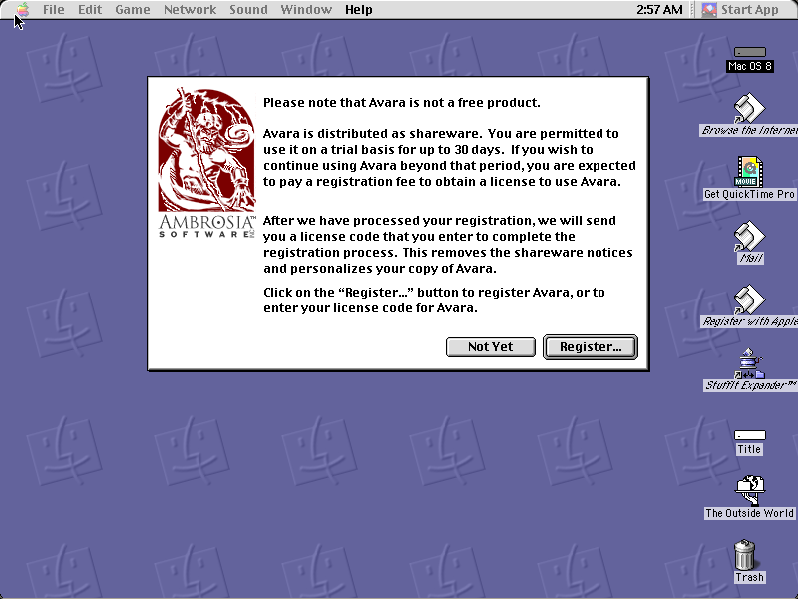
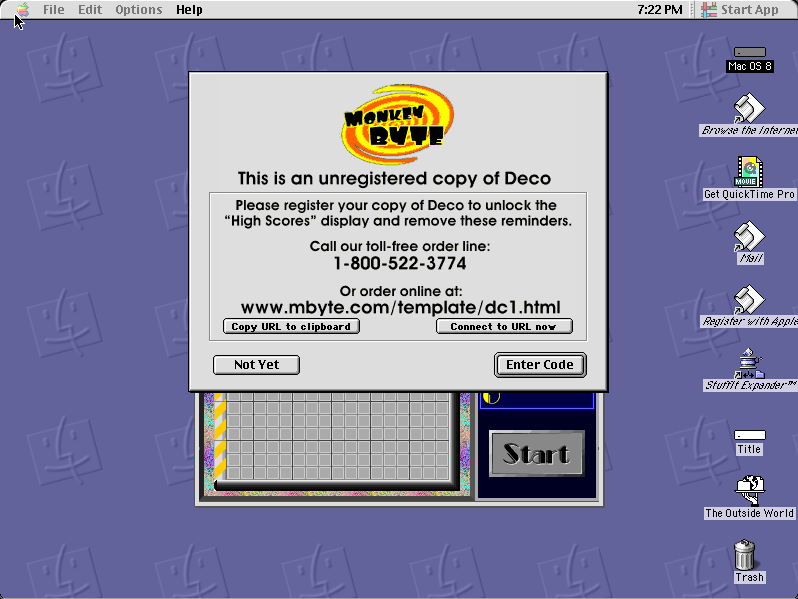
That is the licence this site relies on, and it is followed literally. Every title here is the unregistered release, complete and unmodified. The reminder screens are left exactly where their authors put them — you will meet several of them — and nothing has been patched to remove a limit. Each title's page says where its copy came from and what its licence says, and the reasoning is set out in what shareware licences actually say.
Ambrosia
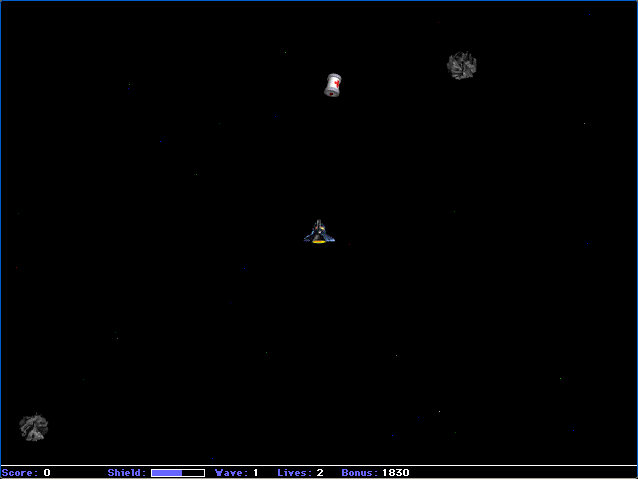
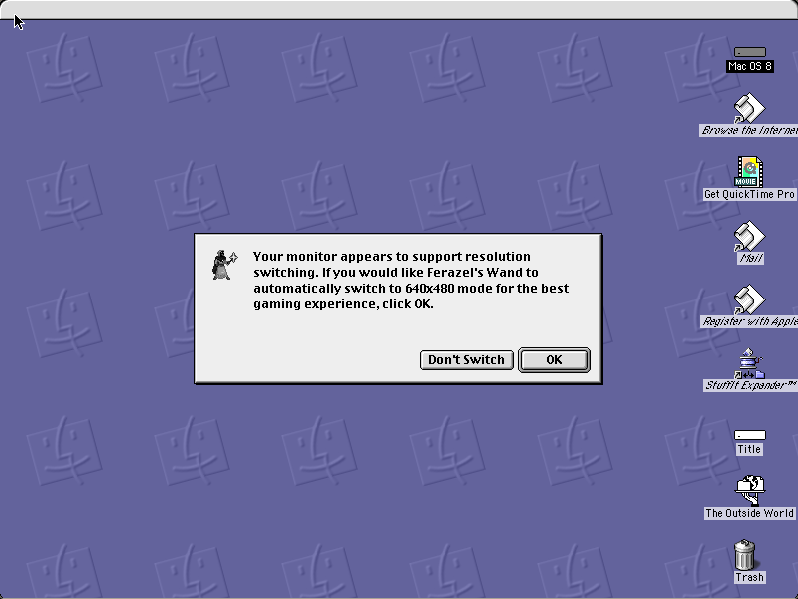
Ambrosia Software was the best-known name in Mac shareware and the most polished. Maelstrom came first and is still the best argument that an arcade game could be made better by rethinking it rather than copying it. Avara was a networked 3D combat game in 1996, Barrack an action-puzzle game, Ferazel's Wand a platformer with some of the best sprite art of the period, and Cythera the most ambitious thing Ambrosia ever published: an open-world role-playing game on an island. Ambrosia's reminder screens were famous in their own right, and they are all here.
The individuals
Much of the best shareware was one person's work. John Calhoun's Glypha was freeware from the author of Glider. Brian Greenstone's Mighty Mike, released by his own Pangea Software, is the game MacPlay later sold as Power Pete. Tim Phillips built Realmz and kept it going for most of a decade. Peter N. Lewis, better known for the internet software he wrote, made Greebles. Space Debris is one of many games Richard Bannister put out. Arashi was released by its authors as freely distributable along with the tools they built to make it.
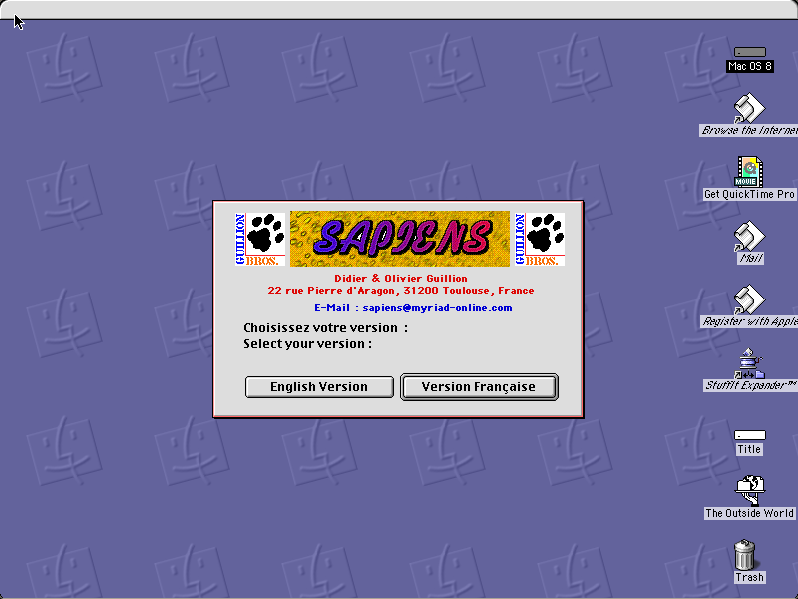
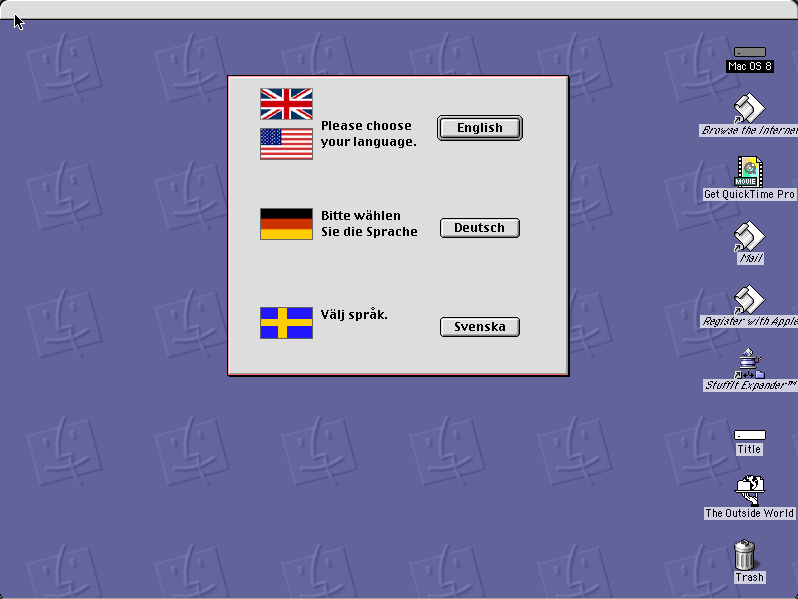
There is also a long tail of smaller work that shows what the scene was actually like: Sapiens, from two brothers in Toulouse, which opens by asking whether you would like it in English or French; Star Fighters, written in Future BASIC; Spins!, whose splash screen advertises a web address that no longer goes anywhere; and solitaire, breakout and arcade games from people whose names are known now only from their own title screens.
Where they came from
The copies here come from the same places they always did: the big archives — Info-Mac, the University of Michigan's Mac archive, and later Tucows — preserved and mirrored long after the originals went offline. Many of the authors are still reachable, and some of their companies still exist. If you wrote something on this page and would rather it were not here, the takedown page explains how to ask, and it will come down.
Playing them now
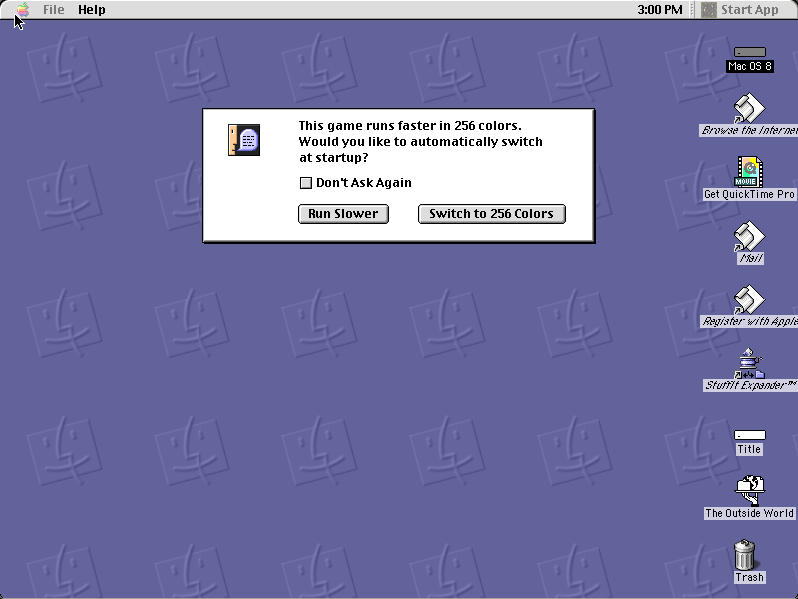
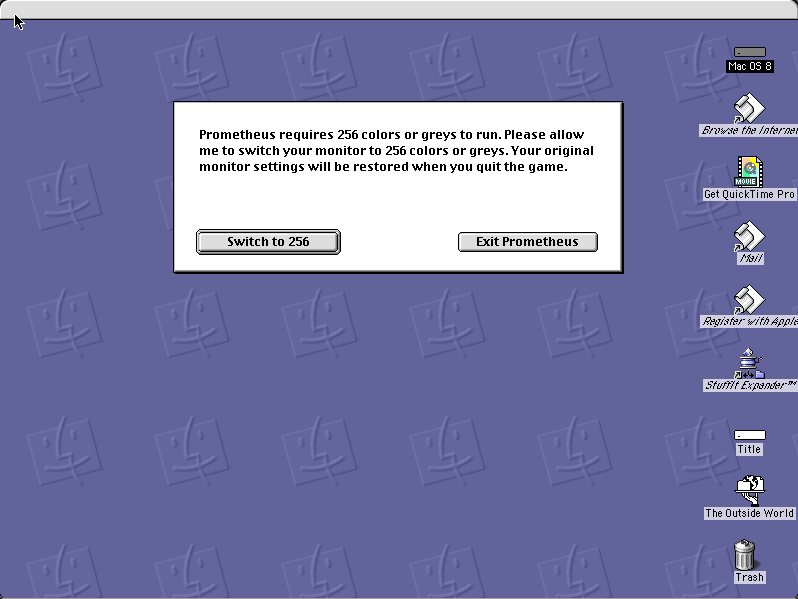
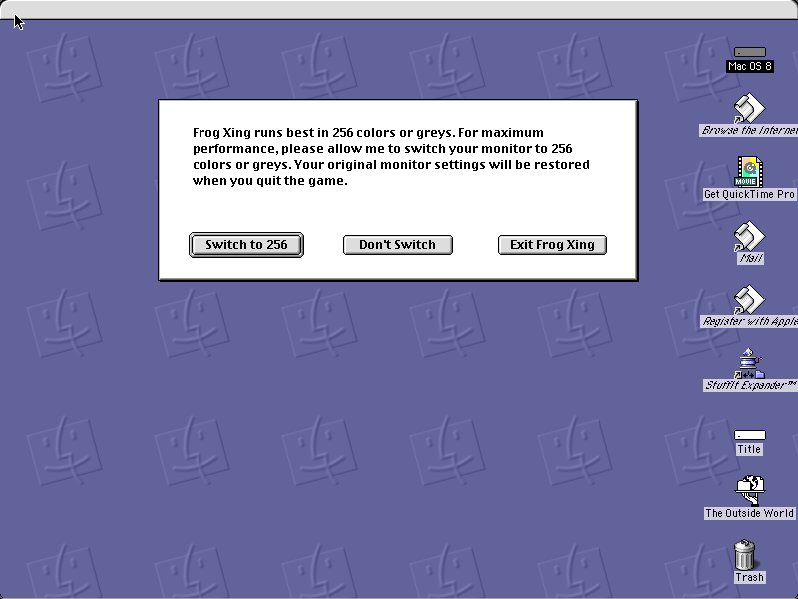
Most of the late-1990s shareware runs on Mac OS 8.6, which means booting a whole later Macintosh, so these take a little longer to start than the floppy-era games. Expect a registration reminder before most of them; the page for each game says which button lets you play on. Registering is, alas, no longer possible for most of these, which is a strange kind of freedom the authors never intended to give.
Play now
-
 Maelstrom NEW FREE▶ Play free
-
 Arashi NEW FREE▶ Play free
-
 Avara NEW▶ Play free
-
 Ferazel's Wand (Demo) NEW▶ Play free
-
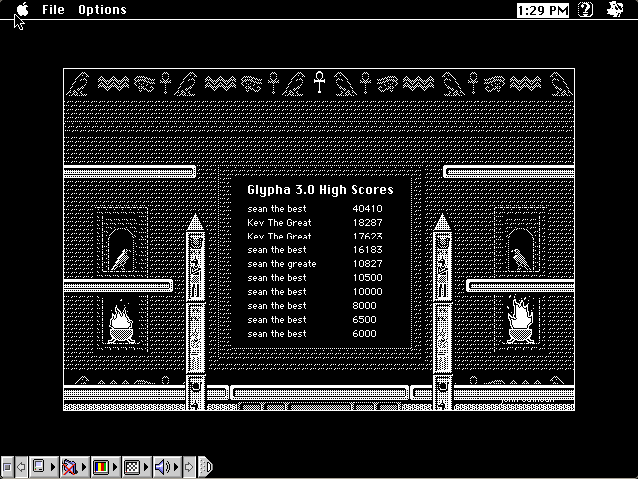 Glypha NEW FREE▶ Play free
-
 Cythera NEW▶ Play free
-
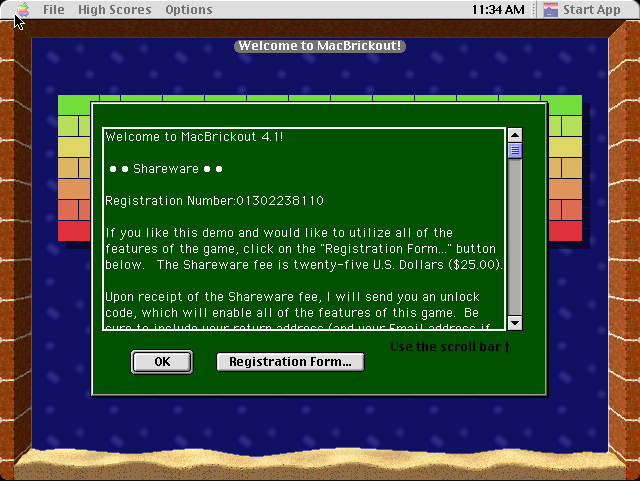 MacBrickout NEW▶ Play free
-
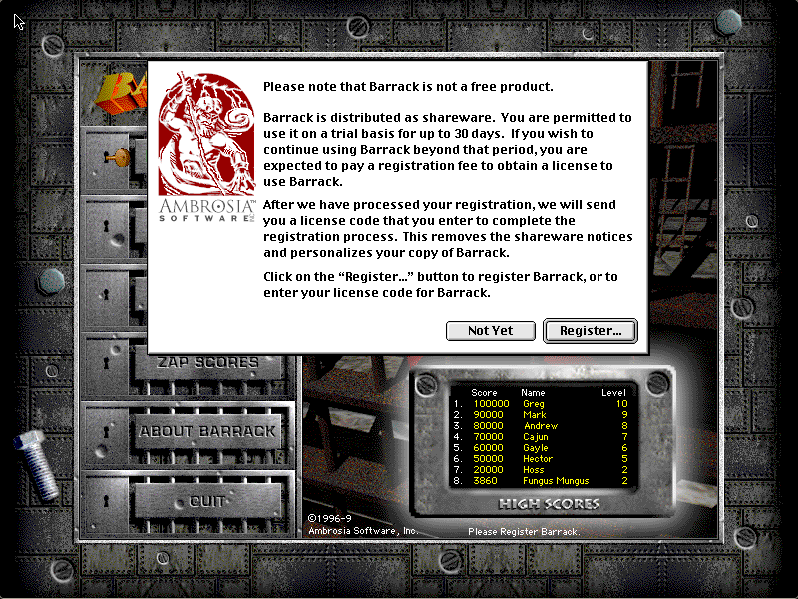 Barrack NEW▶ Play free
-
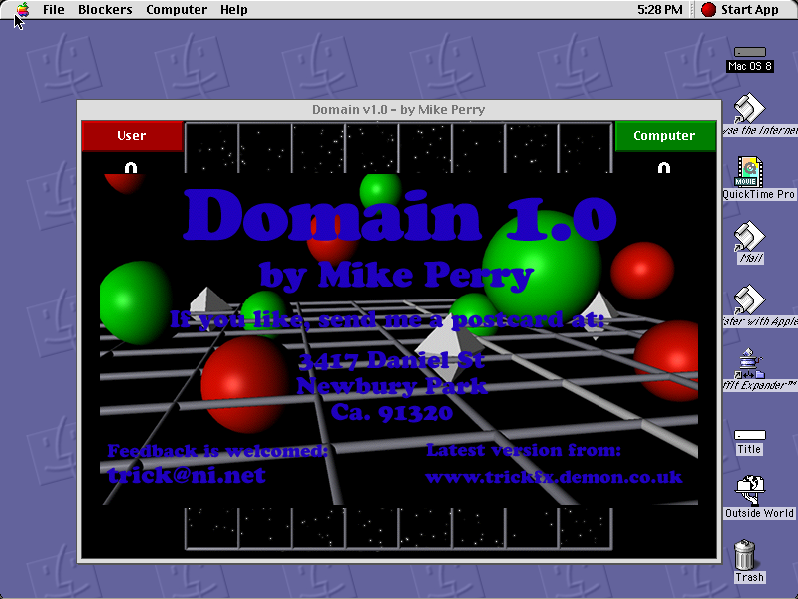 Domain NEW▶ Play free
-
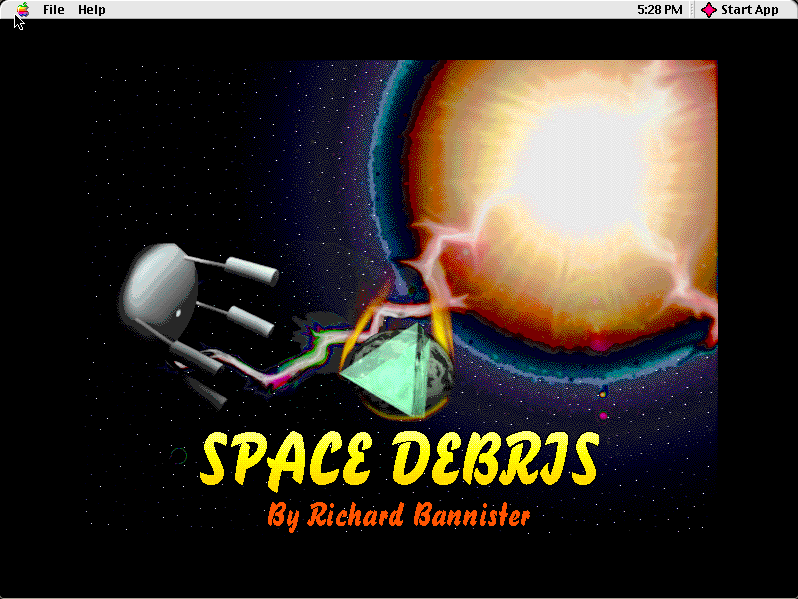 Space Debris NEW▶ Play free
-
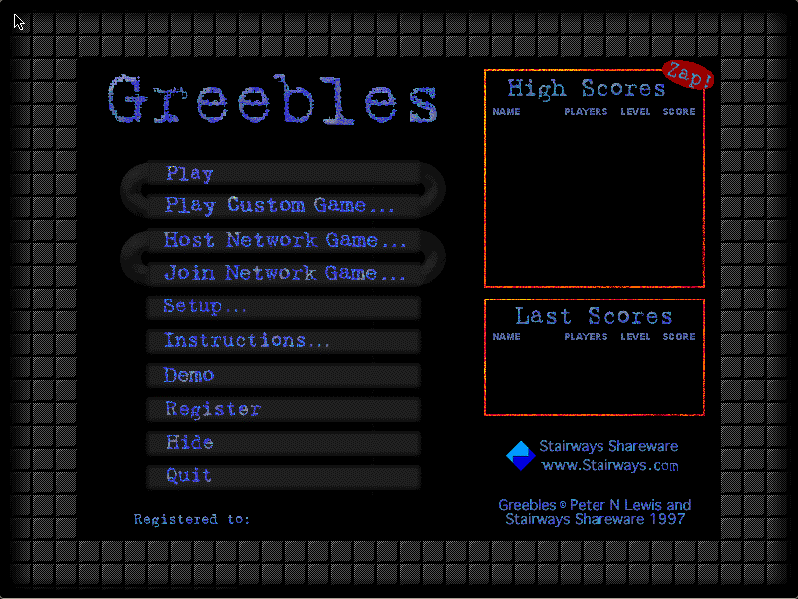 Greebles NEW▶ Play free
-
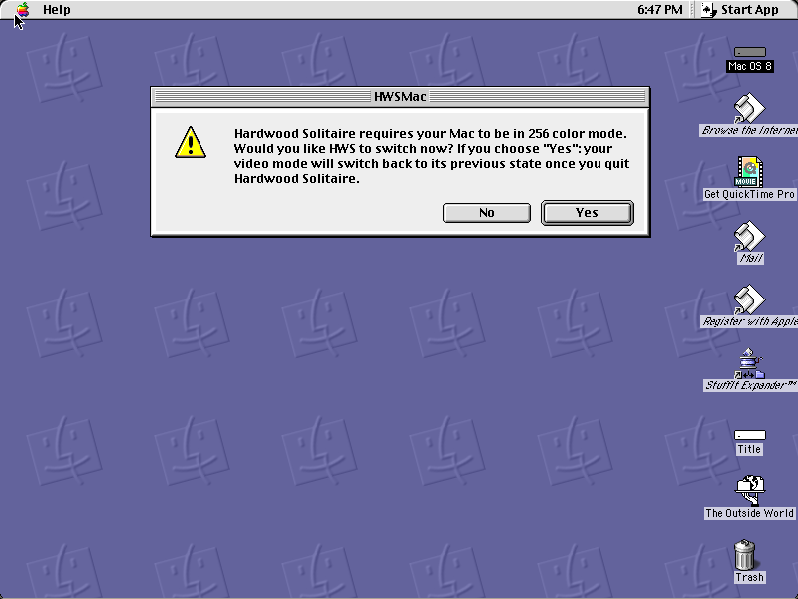 Hardwood Solitaire II NEW▶ Play free
-
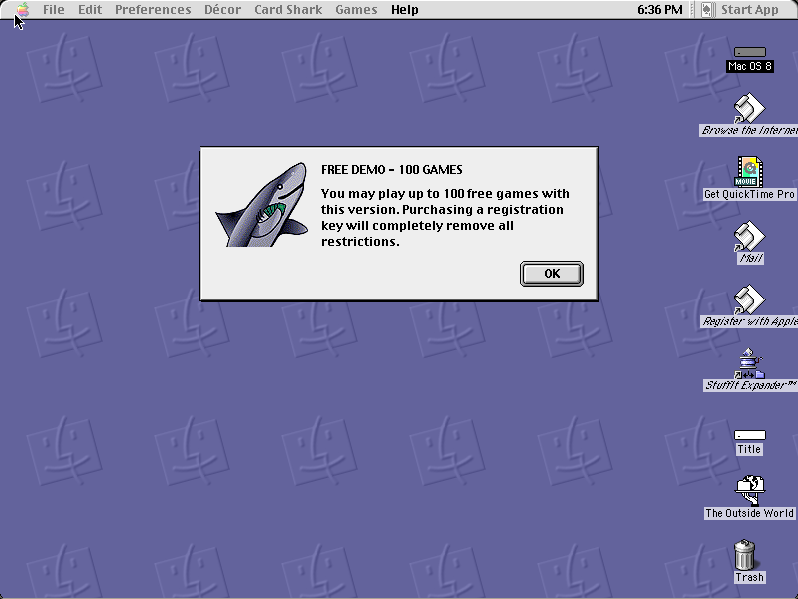 Solitaire Till Dawn NEW▶ Play free
-
 Realmz NEW▶ Play free
-
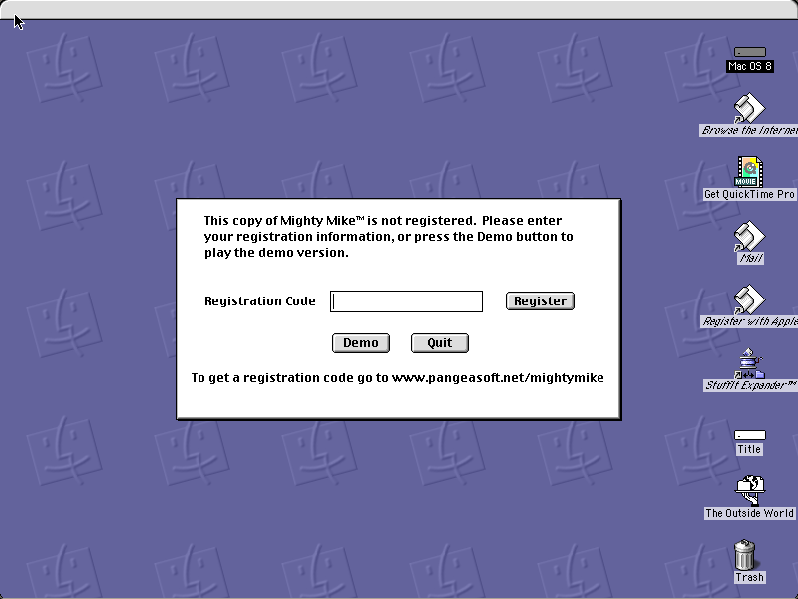 Mighty Mike NEW▶ Play free
-
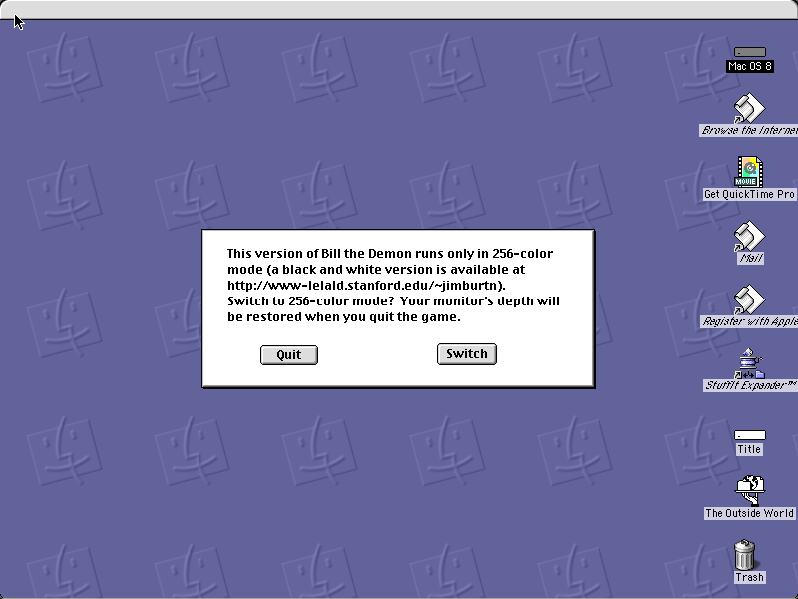 Bill the Demon NEW▶ Play free
-
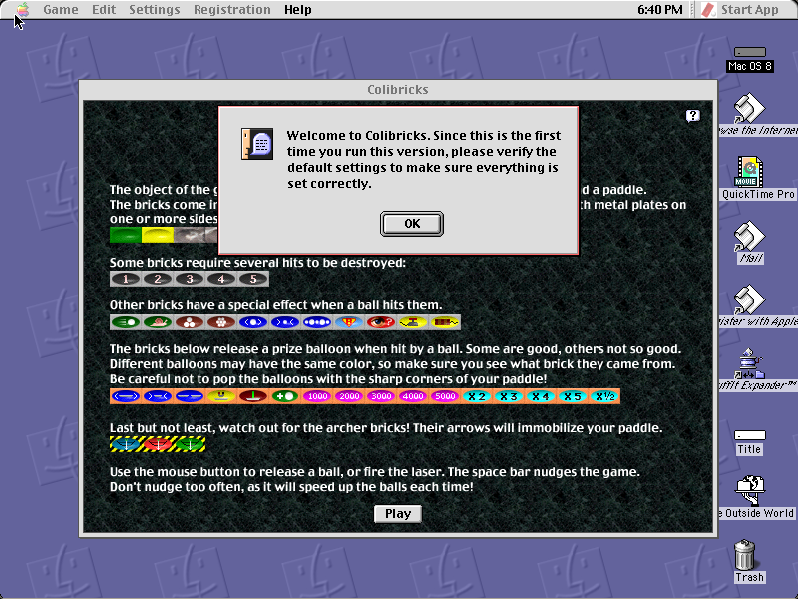 Colibricks NEW▶ Play free
-
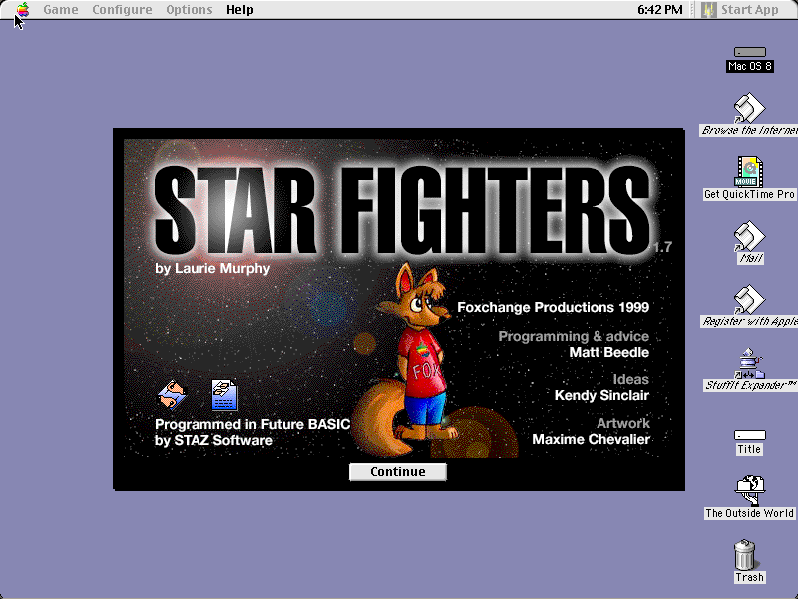 Star Fighters NEW▶ Play free
-
 Diamonds 3D NEW▶ Play free
-
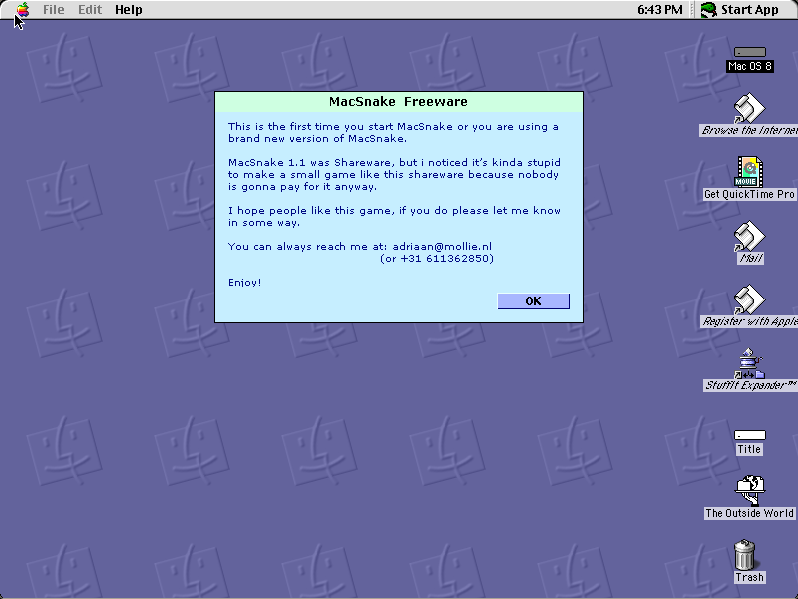 MacSnake NEW FREE▶ Play free
-
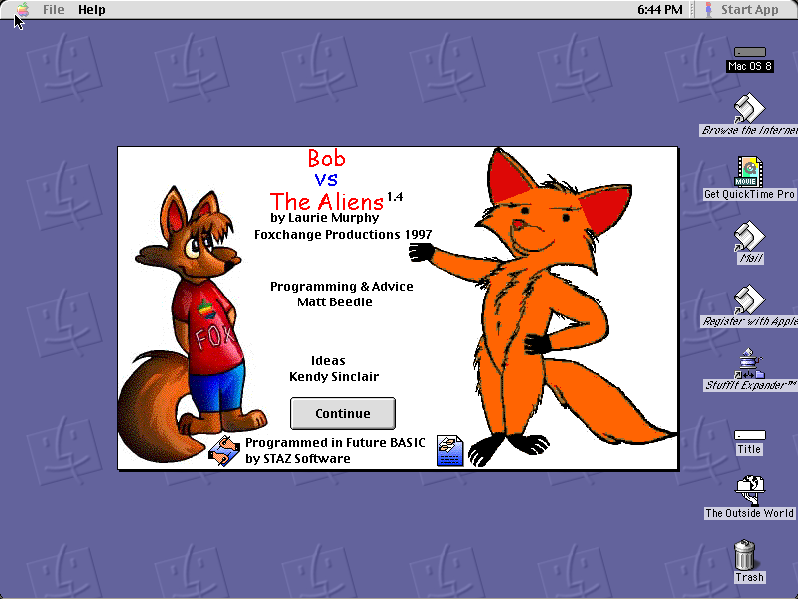 BOB vs The Aliens NEW▶ Play free
-
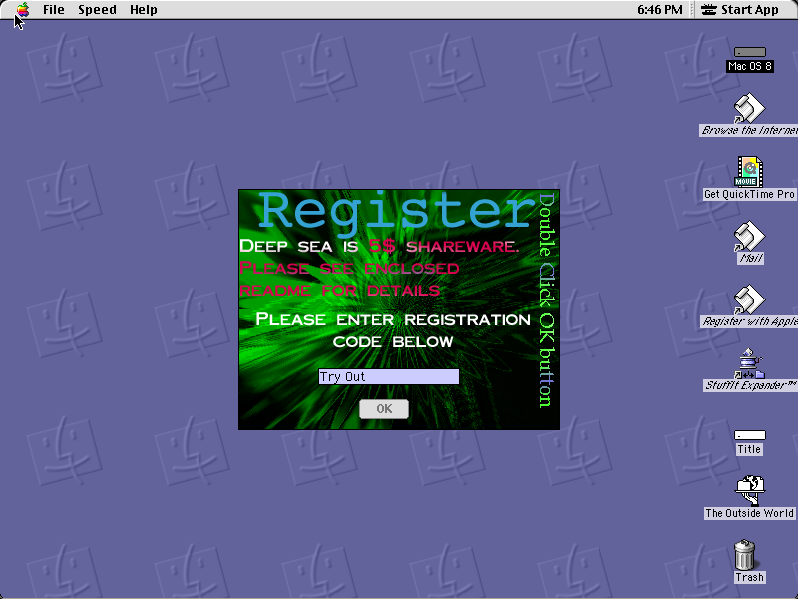 Deep Sea Classic NEW▶ Play free
-
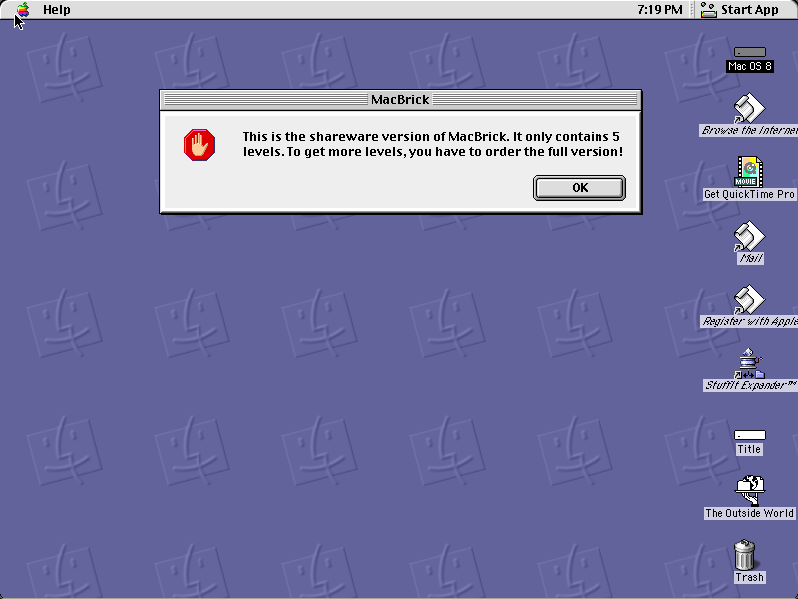 MacBrick NEW▶ Play free
-
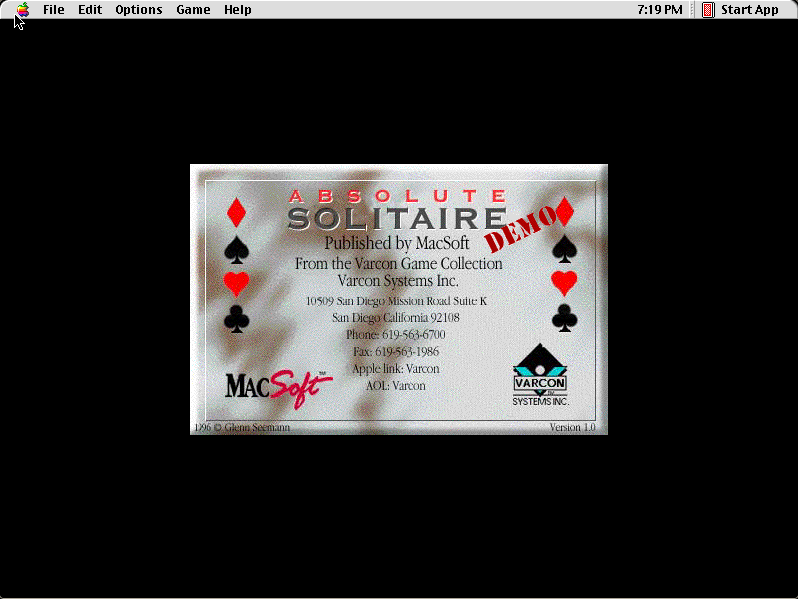 Absolute Solitaire NEW▶ Play free
-
 Deco NEW▶ Play free
-
 Sapiens NEW▶ Play free
-
 Maniac NEW▶ Play free
-
 Bub And Bob NEW▶ Play free
-
 MacDo NEW▶ Play free
-
 Spins! NEW▶ Play free
-
 Prometheus NEW▶ Play free
-
 Frog Xing NEW▶ Play free
-
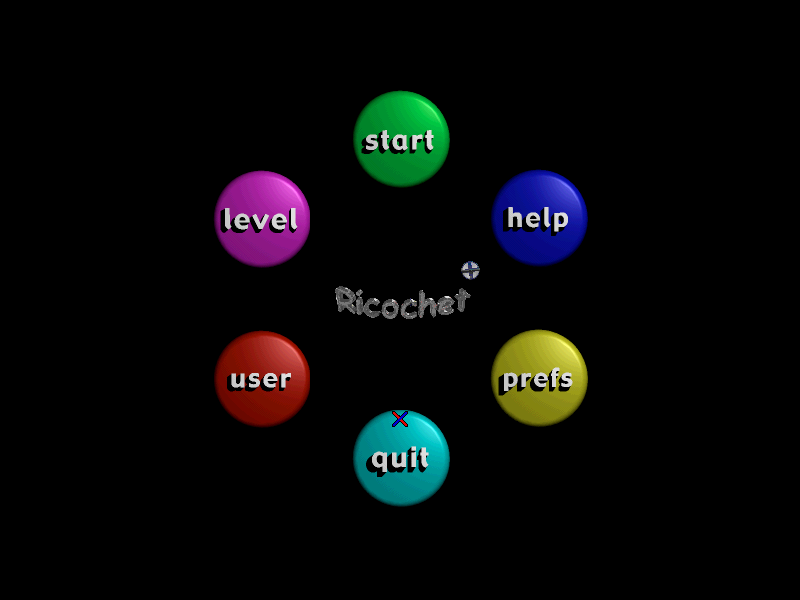 Ricochet NEW▶ Play free
-
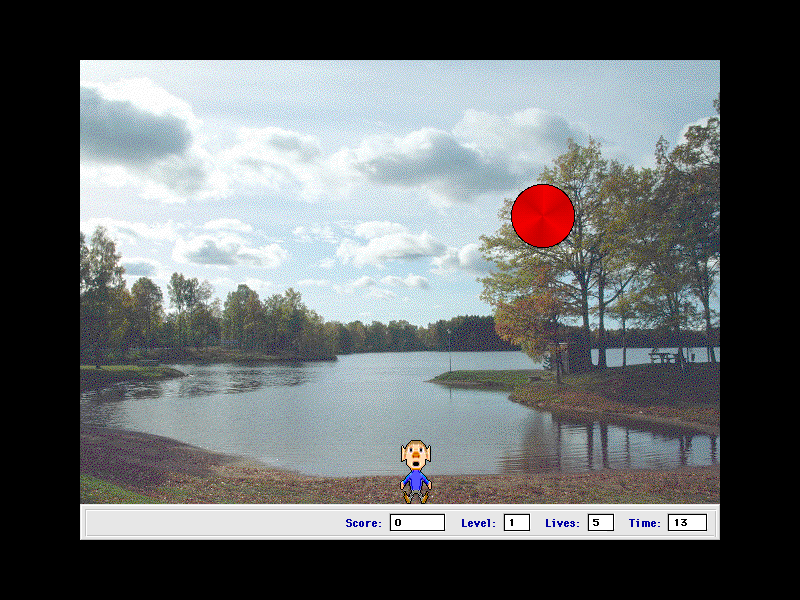 Zap'T'Balls II NEW▶ Play free
-
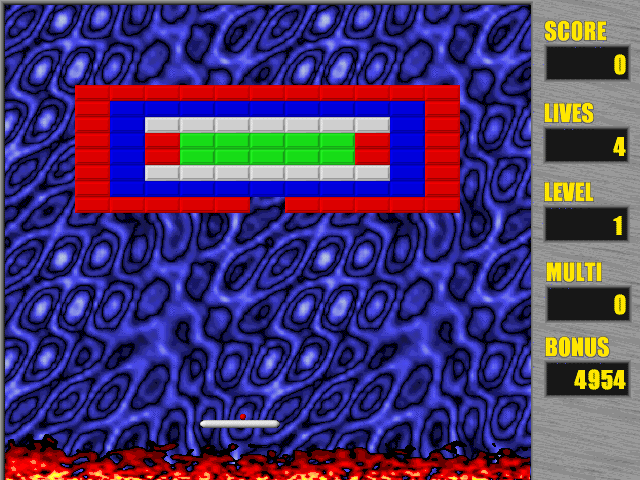 Sphaera NEW▶ Play free