Classic Mac board and card games
Board and card games were among the first things anybody wrote for the Macintosh, for an obvious reason: the machine could draw a chessboard or a playing card that looked like the real object, at a time when most computers could not. That was a genuine selling point in 1984, and the games on this page are the record of it — from a backgammon program written in the Mac's first months to the elaborate solitaire collections of the late 1990s.
Chess and its relations
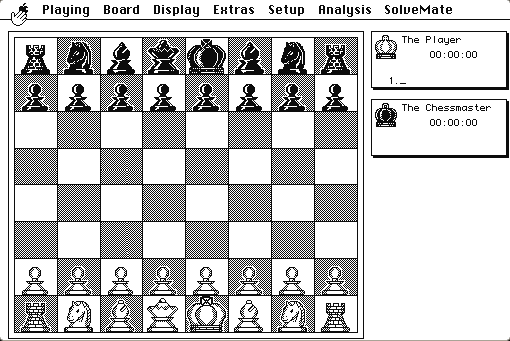
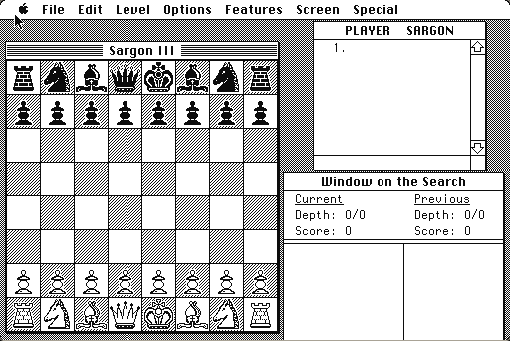
Sargon III comes from Dan and Kathe Spracklen, whose original Sargon won the first microcomputer chess tournament in 1978. The Chessmaster 2000 is the program that turned chess software into a consumer product, on the strength of presentation as much as playing strength. Both are real opponents at their higher levels, on an eight-megahertz machine with one megabyte of memory.
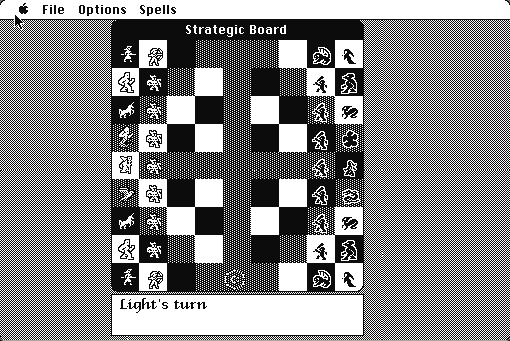
Archon looks like chess and is not: when two pieces meet, the board gives way to an arena and they fight it out in real time. Stratego is Accolade's version of the board game of hidden ranks, and Pensate is a pure puzzle on a board — no randomness, no reaction time, a set of pieces that each move by a fixed rule, and a solution that is always there if you can see it.
The first-year software
Some of the most charming things here are the simplest. MacGammon! is backgammon with the doubling cube, copyright 1984. MacCheckers and Reversi puts both games in one application that fits on a 400K floppy with room to spare. MacMatch is a memory game from the same year and one of the oldest pieces of third-party Macintosh software that still runs. None of them are deep. All of them show what a small, well-made Macintosh program looked like before anyone had settled what one should look like.
Shanghai
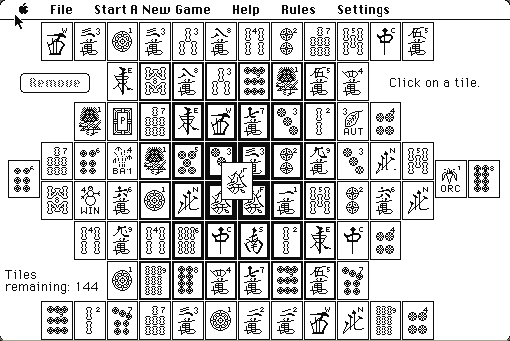
Shanghai is the game most people know as mahjong solitaire, and this is the original commercial release. Brodie Lockard first wrote the idea on the PLATO system years earlier; Activision's 1986 Macintosh version is where it reached a wide audience, and the tile set drawn in one-bit black and white is still one of the handsomest things on the platform. Clear the pairs of free tiles until the heap is gone — or, more often, until it is not.
Solitaire, three ways
By the late 1990s solitaire on the Mac was its own small industry. Solitaire Till Dawn was the collection Mac owners actually had: dozens of variants on one engine, with rules for each and statistics kept per game. Hardwood Solitaire II bet on looks — a rendered wooden table and cards that looked like objects. Absolute Solitaire came in a box from MacSoft. All three are the shareware or demo releases, left exactly as they were distributed, limits and registration notices included.
Playing them now
The 1984–86 titles boot on an emulated Macintosh Plus in about a second and are comfortable on a phone. The solitaire collections run on Mac OS 8.6 and take longer to start, since they are booting a whole later Macintosh rather than a floppy. Most of these games are played entirely with the mouse, which makes them among the easiest things on the site to simply pick up.
Play now
-
 Shanghai NEW▶ Play free
-
 Archon NEW▶ Play free
-
 The Chessmaster 2000 NEW▶ Play free
-
 Sargon III NEW▶ Play free
-
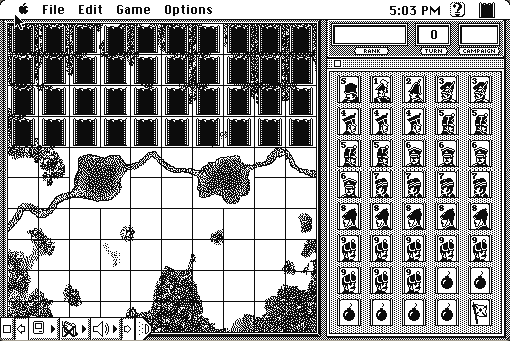 Stratego NEW▶ Play free
-
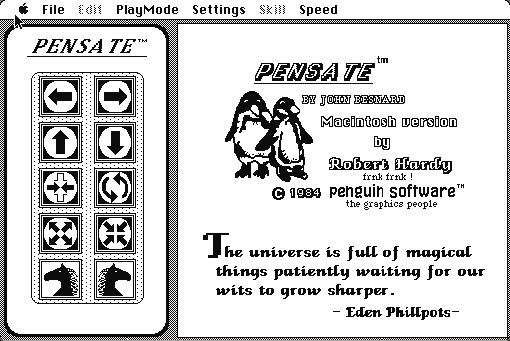 Pensate NEW▶ Play free
-
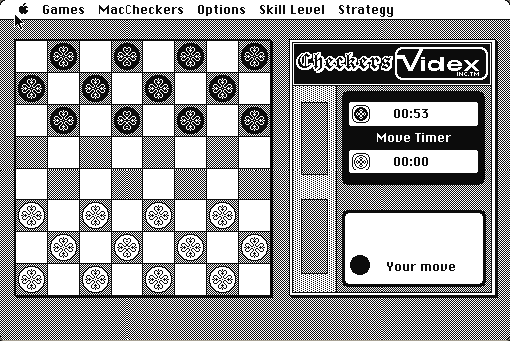 MacCheckers and Reversi NEW▶ Play free
-
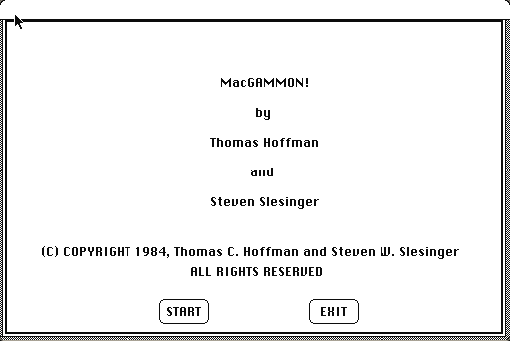 MacGammon! NEW▶ Play free
-
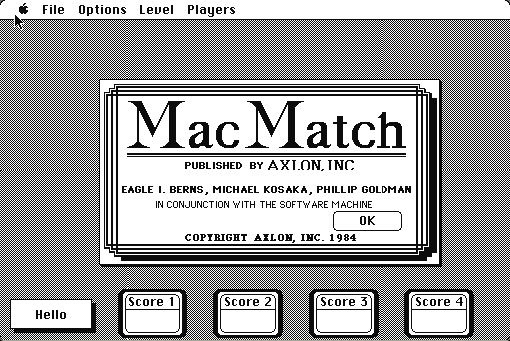 MacMatch NEW▶ Play free
-
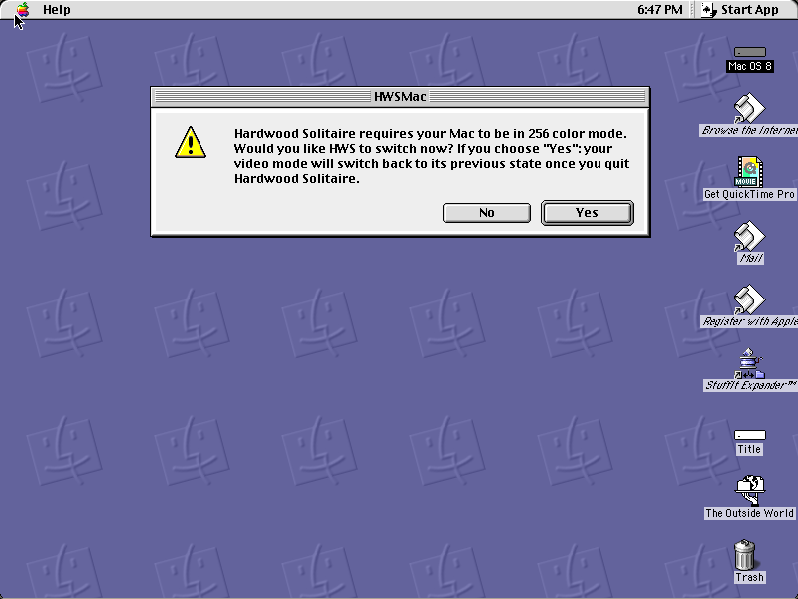 Hardwood Solitaire II NEW▶ Play free
-
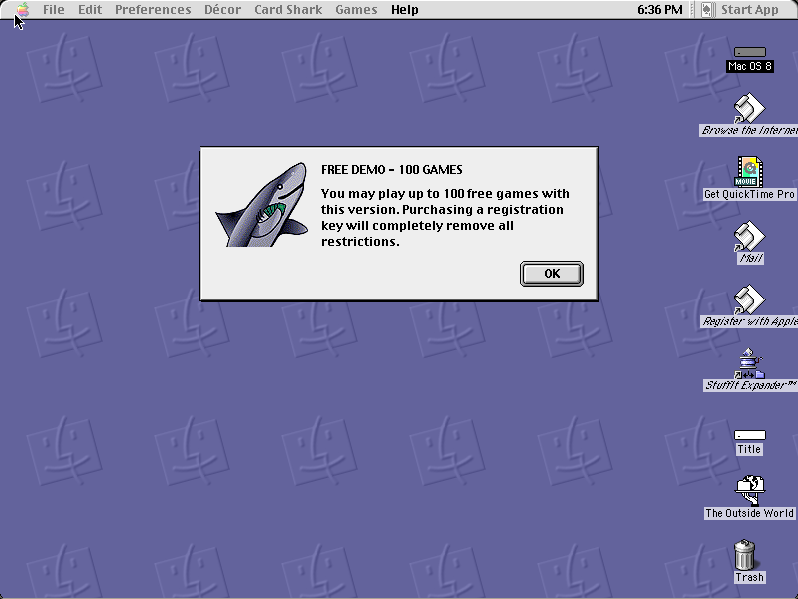 Solitaire Till Dawn NEW▶ Play free
-
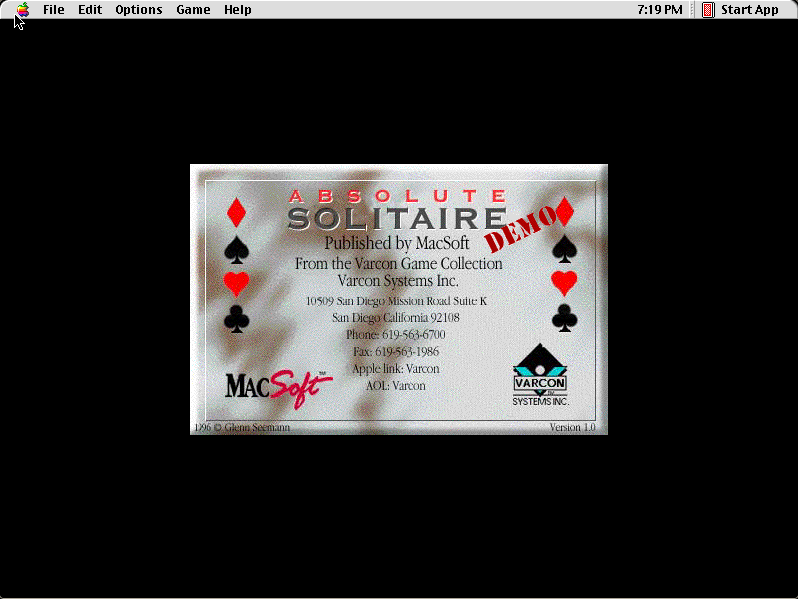 Absolute Solitaire NEW▶ Play free